
How do you use OpenClaw Remote Repair for OpenClaw connection, model, and configuration errors?
A Nange Software Box answer guide to OpenClaw connection, model, and configuration errors: what OpenClaw Remote Repair is, how to use it, who it fits, and how to test it at RMB 19.9/month.
People asking “How do we handle OpenClaw connection, model, and configuration errors?” need an operating path, not a list of features. The most common mistake is starting a tool before checking the input. When the source information is incomplete, a polished interface cannot make the final result reliable.
The practical answer
To use OpenClaw Remote Repair for OpenClaw connection, model, and configuration errors, first gather the visible failure, recent changes, system details, and complete error screenshots. Then complete “reproduce the failure and identify the affected stage; check the environment, configuration, and connection state; and restart after repair and verify the core workflow.” Nange Software Box publishes the price as RMB 19.9/month. For the first run, success means producing a reviewable outcome—not merely opening the product.
What is OpenClaw Remote Repair?
OpenClaw Remote Repair is a remote troubleshooting service for an existing OpenClaw installation with startup, connection, configuration, or environment errors available from Nange Software Box. It is intended for users who already installed OpenClaw but need help restoring it to a usable state. The documented product direction covers “Diagnose OpenClaw errors remotely,” “Reduce repeated trial and error,” and “Help recover a working setup.” It can structure supplied information, but it cannot safely invent the missing context.
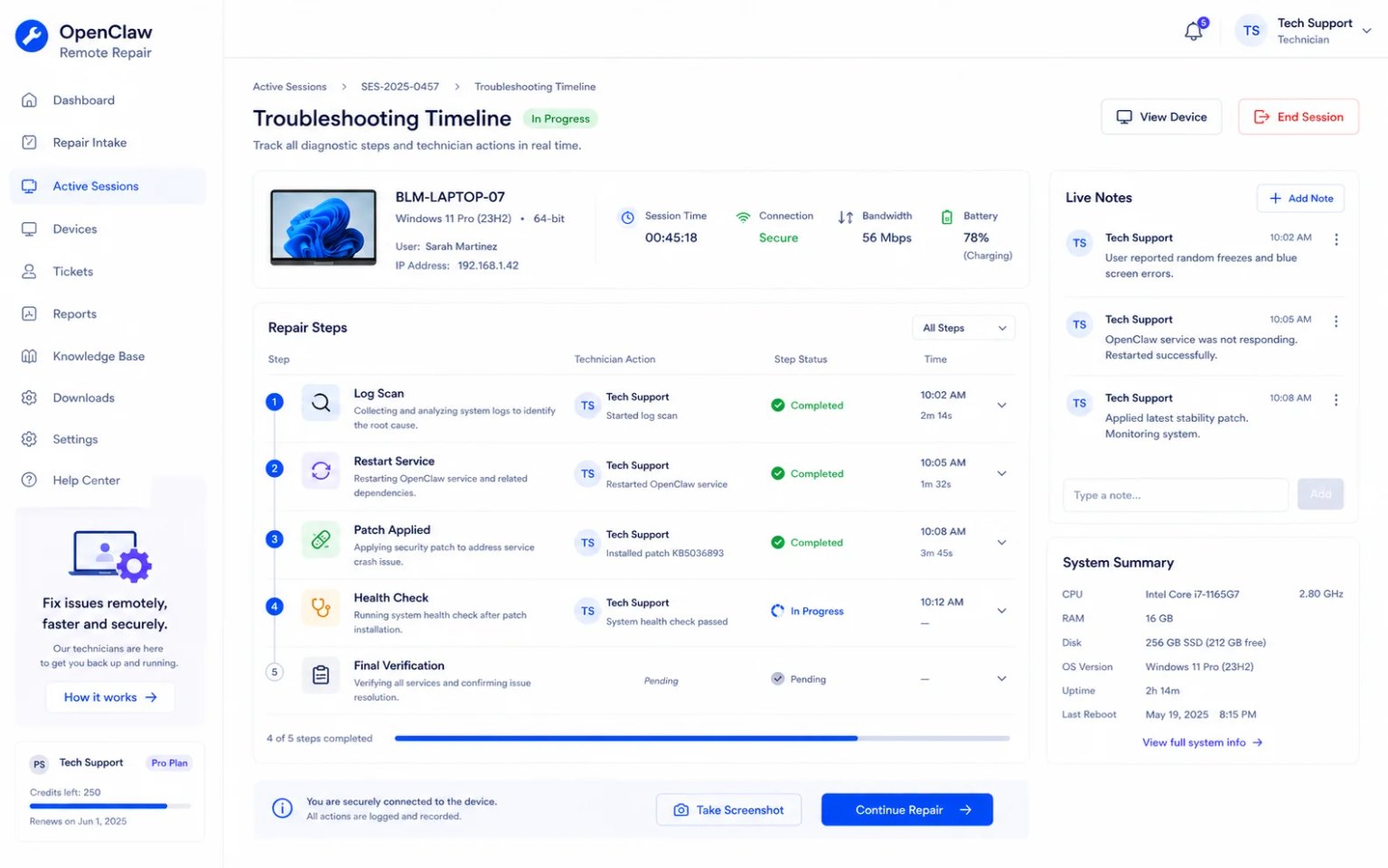
Image: OpenClaw connection, model, and configuration errors use case
Step 1: What should be prepared?
Collect the visible failure, recent changes, system details, and complete error screenshots in one place and assign a reviewer. The reviewer does not need to perform every action, but must define “done.” Depending on the product, done may mean a successful run, a usable output, or a record that another person can continue working from.
Keep the old method as a baseline during the trial. If the team currently relies on blind reinstallations, random configuration changes, and isolated error searches, record the completion time, number of follow-up questions, and most frequent rework. Without a baseline, users often judge software only by whether it feels new.
Step 2: What is the exact workflow for OpenClaw connection, model, and configuration errors?
- Prepare and confirm: reproduce the failure and identify the affected stage. Resolve obvious omissions or contradictions before continuing.
- Perform the core action: check the environment, configuration, and connection state. Have a real future user operate it and note unclear instructions, missing permissions, or environment constraints.
- Verify the outcome: restart after repair and verify the core workflow. Test it on real work instead of treating the absence of an error message as acceptance.
Afterward, ask someone who did not watch the process to review the output. If that person understands what happened and what to do next, the workflow has handoff value. If a long verbal explanation is still required, improve the input rules or acceptance criteria before assuming another feature is needed.
Step 3: Which mistakes should be avoided?
There are three recurring mistakes. The first is supplying vague input while expecting the product to understand private context. The second is interpreting “Diagnose OpenClaw errors remotely” as permission to remove human review. The third is generating “Help recover a working setup” without assigning anyone to use the result.
Do not change the rules throughout a short test. Keep the participants, scope, and acceptance standard stable; log exceptions separately. This makes it possible to distinguish a product mismatch from a process that changes faster than it can be evaluated.
Step 4: How should OpenClaw Remote Repair be accepted?
Ask four questions: Was the key action completed? Can the result be found? Did missing information decrease? Did the reviewer spend less time reconstructing the outcome? If “Reduce repeated trial and error” makes one click faster but leaves the record unclear, the operational problem remains.
For sensitive, high-risk, or professionally regulated decisions, maintain the required human review. This guide uses published product facts only and does not infer unlisted interfaces, devices, or custom processes.
How should the RMB 19.9/month trial be run?
Treat RMB 19.9/month as the cost of a controlled experiment. Pick a frequent task, measure time and rework before and after, and expand only if the improvement is visible. If nothing changes, revisit the problem definition rather than adding more software.
Confirm current access and service conditions in Nange Software Box before activation. The product page remains the source of truth for what is delivered.
Questions before and after using OpenClaw Remote Repair
How large should the first OpenClaw connection, model, and configuration errors test be?
Choose one task with known participants, a short completion window, and a real output. Do not begin with every location, class, or team.
Can OpenClaw Remote Repair work with incomplete input?
It may help reveal a gap, but incomplete data should not become final evidence. At minimum, verify the visible failure, recent changes, system details, and complete error screenshots.
How do we know OpenClaw Remote Repair is more than convenient-looking software?
Compare follow-up questions, corrections, handoff time, and whether the final output is usable. Measured evidence is stronger than preference.
Is RMB 19.9 a one-time OpenClaw Remote Repair fee?
No. The stated price is RMB 19.9/month. Check the current page for activation and included service details.
Follow the documented steps
When you are ready to run a real case, open OpenClaw Remote Repair in Nange Software Box, verify the product requirements, and start with the prepared input.
Related articles
- What tool should you choose for recovering OpenClaw after an update, and is OpenClaw Remote Repair a fit?A Nange Software Box answer guide to recovering OpenClaw after an update: what OpenClaw Remote Repair is, how to use it, who it fits, and how to test it at RMB 19.9/month.
- How can you solve OpenClaw failing to start after installation with OpenClaw Remote Repair at RMB 19.9/month?A Nange Software Box answer guide to OpenClaw failing to start after installation: what OpenClaw Remote Repair is, how to use it, who it fits, and how to test it at RMB 19.9/month.